
Best Places to See The Southern Lights in Tasmania (even with no stellar sky show)
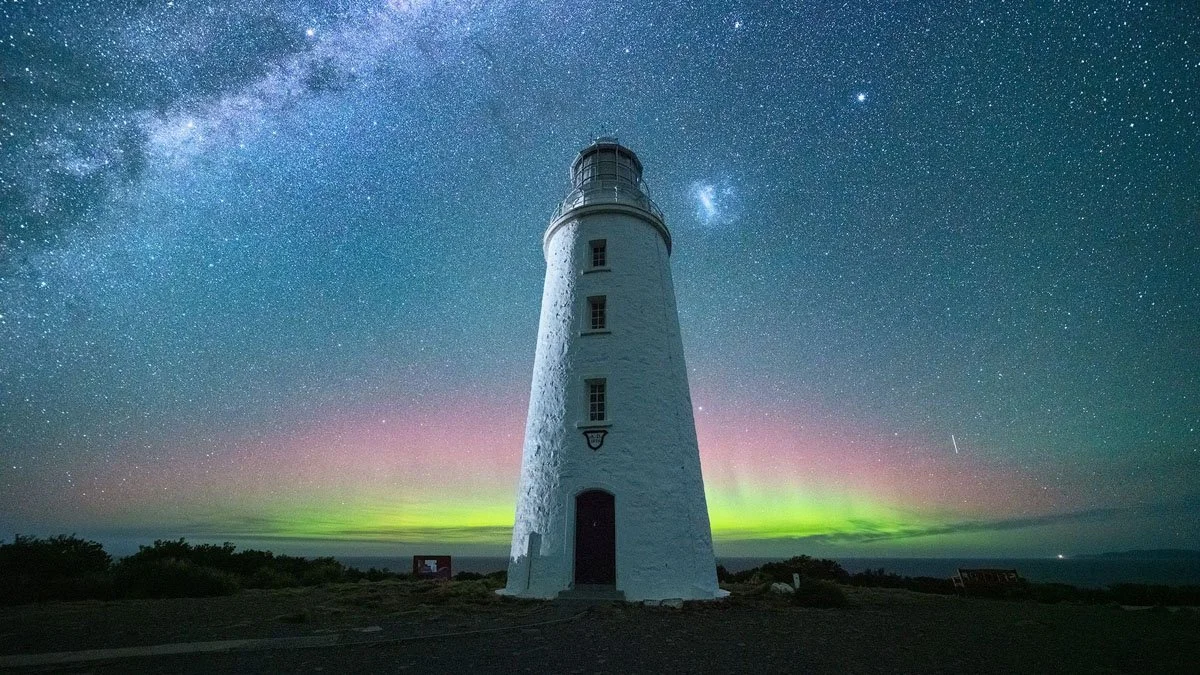
Photo Credit: Luke Tscharke
Part timing and part ol’ fashioned luck, an Aurora Australis (Southern Lights) is an alchemy of nature. This soul-stirring spectacle occurs when electrically charged solar particles interact with gas in our planet’s atmosphere. Famously referred to as “disco in the sky”, it’s the ribbons of green, pink, blue and purple that leave aurora chasers mesmerised and mystified.
However, the Aurora Australis unfortunately works to its own elusive timetable. So while a light show is never guaranteed, the best place to see them is below the Arctic Circle. And sitting on the world’s southern fringe? Tasmania.
Here’s your guide to the island’s best aurora and stargazing locations in Tassie, each one stellar, with or without the glow.
These Tasmanian spots consistently deliver strong southern views, dark skies and repeat activity.
Photo Credit: Luke Tscharke
Bruny Island
Bruny Island isn’t just about gourmet oysters and wandering wombats. It’s, dare we say, the best spot to catch the Southern Lights. Just 30 minutes from Hobart, the island feels worlds away, with minimal light pollution and a remote outpost. Sweep your gaze south from The Neck lookout to catch emerald and turquoise curtains draping across the horizon.
Seeking a showstopping shot? Use Cape Bruny Lighthouse as your muse and capture the glow of the shimmering aurora above. Add moonlit beaches or rugged cliffs, and you have a display that is utterly heavenly.
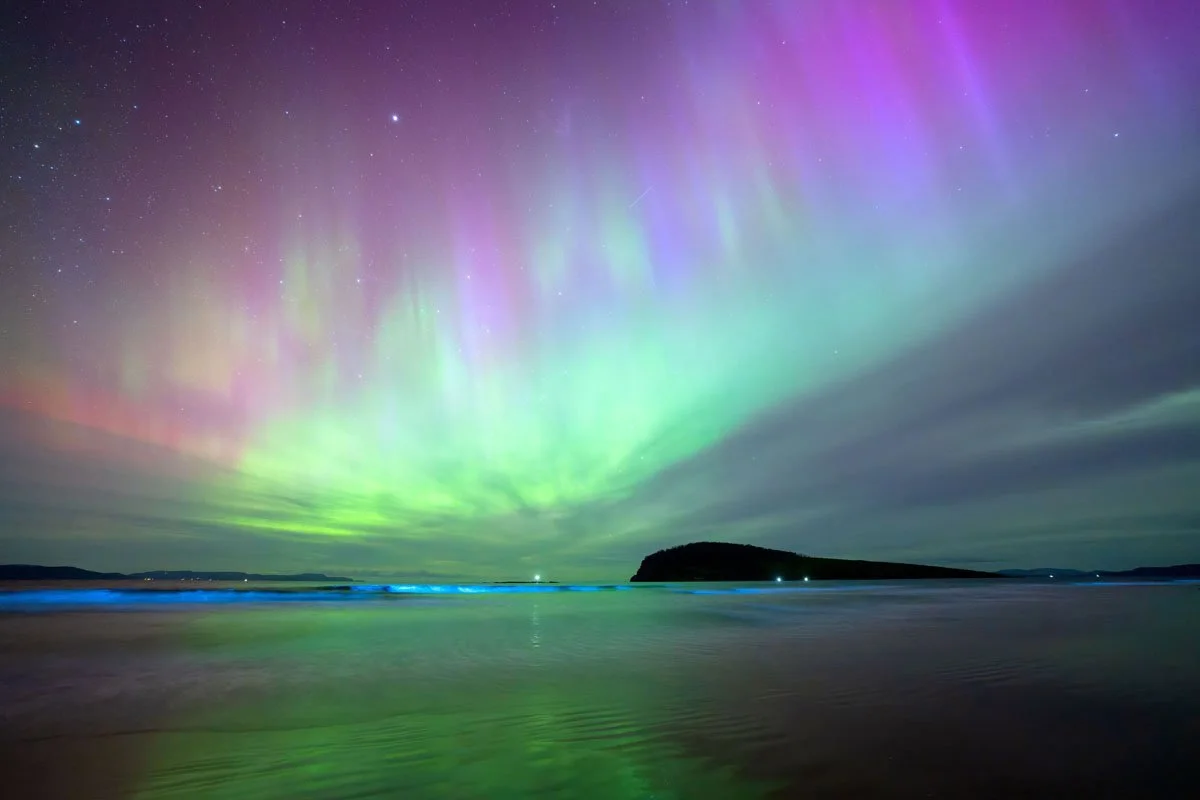
Photo Credit: Luke Tscharke
South Arm Peninsula & Goat Bluff Lookout
Sitting on the South Arm Peninsula, Goat Bluff Lookout is one of the best Aurora Australis vantage points. With unobstructed southern views, clear skies unveil curtains of hot pink, lemon, lime and lilac across the horizon, mirrored in the waters below. Photographers love the south-facing bay – and serious shutterbugs swear that an angle degree or two west delivers close to perfection.
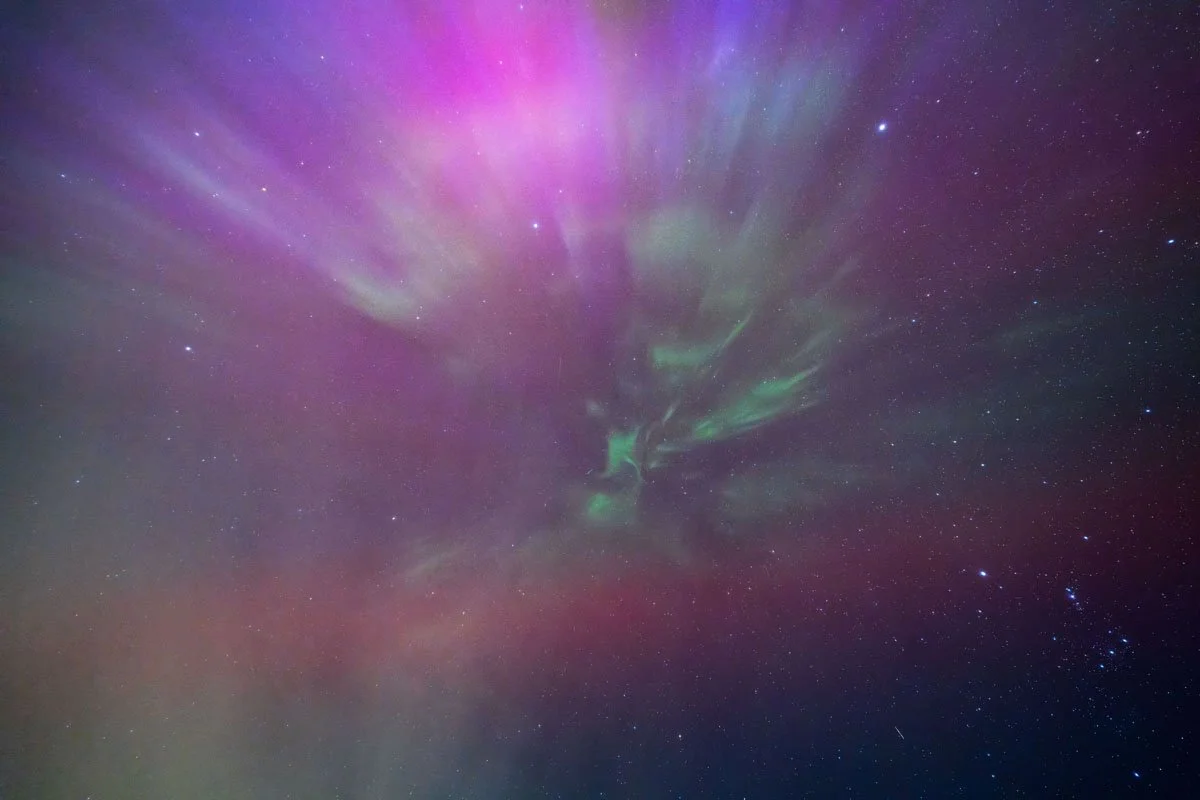
Photo Credit: Luke Tscharke
Mount Wellington
Want to see the Southern Lights sans road trip? Hovering above Hobart, Mount Wellington’s elevation gives a clear, dark horizon, letting party people experience a disco of a different kind. See 50 shades of green – from electric and turquoise to jade and zesty – while the city twinkles far below. Time your visit during Dark Mofo, and you can also see the city at its most wacky and wonderful.
These are the spots you want to hit up with distinctive Tasmanian landmarks so your Aurora shots have scenic, beyond imagination, compositions:
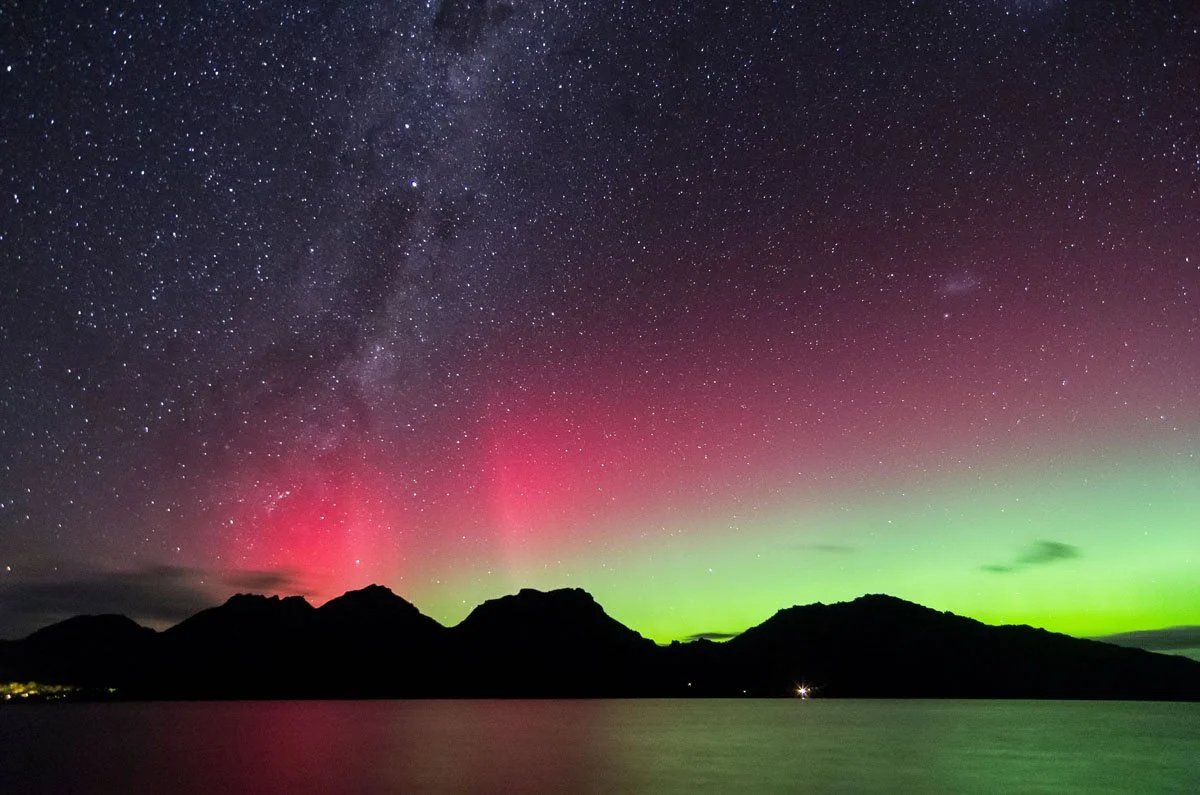
Photo Credit: Luke O'Brien Photography
Cape Tourville Lighthouse, Coles Bay
By day, this elevated walkway offers views of the Hazards, Wineglass Bay and the offshore The Nuggets, and by night, you can experience the silhouette of the Cape Tourville Lighthouse under Mother Nature’s light show. This easy 20-minute boardwalk circles the lighthouse, making every vantage point a great one. Even if the Southern Lights are not lighting up the coast, you’ll find yourself under a bright blanket of stars. You’ll feel almost like you’re floating through space.
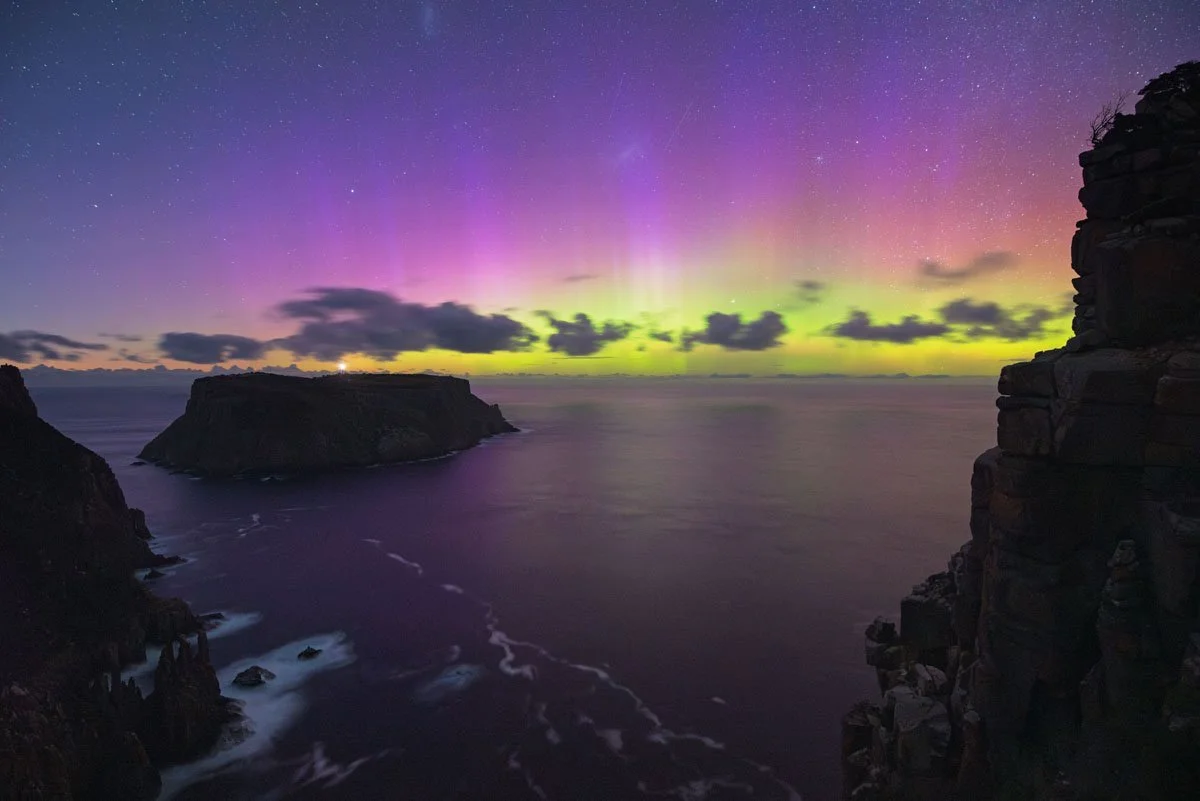
Photo Credit: Luke O'Brien Photography
Tasman Peninsula
Choose Fossil Island, Waterfall Bay or Pirates Bay and your light show will be framed with sea stacks, cliffs and coastlines. Perhaps it’s the sheer seclusion or the unobstructed skies above, but the aurora’s shimmering emerald glow creates an enchanting atmosphere that even fairy godmothers would envy.
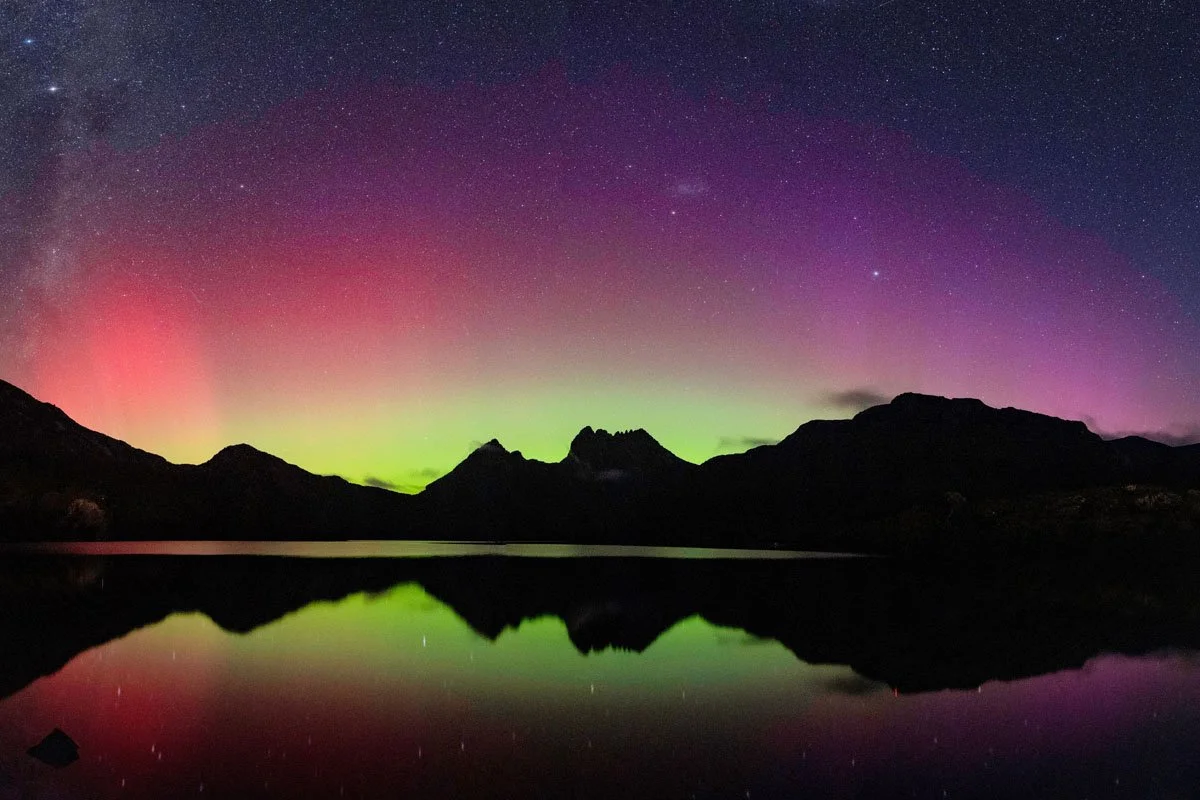
Photo Credit: Luke O'Brien Photography
Dove Lake, Cradle Mountain
Here, ancient myrtle forests and sweeping alpine landscapes serve up quite a sight to behold. But come nightfall, find a spot by Dove Lake and you’re well placed for celestial cinema. Lucky travellers could see neon green ribbon overhead, magenta flashes tumbleweed-ing across still lakes and lilac hues behind Cradle Mountain’s silhouette. It’s a pretty showstopping scene.
While there are many spots that lend themselves to Southern Lights-watching, a beach’s flat terrain and ocean views make it one of Tasmania’s best places to get those prize-worthy, slow shutter speed pics:
Binalong Bay, St Helens
Binalong Bay’s secluded beach isn’t just for sun and surf – it’s a front-row seat to the Southern Lights. As the day winds down, leave your hikes and bikes at your accommodation and settle onto the squeaky sands. With the inky sky above, watch purple and yellow auroras dance over white sands, calm waters and granite outcrops, turning this serene beach into one of Tasmania’s most magical vantage points.
Squeaking Point Jetty, Port Sorell
It’s technically a jetty, but this is a favourite local viewing spot for catching the Southern Lights when they make an appearance. When Aurora is feeling confident, this long wooden jetty becomes host to a technicolour display of chartreuse and coral, candy pink. By morning, anglers will love casting a line from Port Sorell’s fishing pontoon, while beach bums can choose between Shearwater, Hawley or Freers beaches.
For more inspiration, check out The Best Time to Travel to Tasmania
How do you see the Aurora Australis?
To give yourself the best chance, head somewhere well away from city lights. Basically, the darker and more remote, the better! Tasmania’s southern latitude and minimal light pollution make it one of the world’s primo viewing spots. Head out on a clear, cloud-free night with little or no moonlight, which allows the colours to really pop against the darkness of the big blue.
When is the best time to see the Southern Lights in Australia?
The Southern Lights (and the Northern Lights) are famously unpredictable, so patience is part of the adventure.
They’re most commonly spotted in March and September. That’s when the Earth’s magnetic field is best oriented to interact with the solar wind.
Winter has the reputation for being ‘aurora season’. That’s simply because darkness lasts longer, of course, boosting your chances.
Displays often last one to three hours and tend to peak between 10pm and 2am.
For the best intel, keep an eye on the Bureau of Meteorology’s Aurora Watch alerts or sign up to the Tasmanian Aurora page on Facebook - this is honestly the best place for local and frequent information.
How do you photograph the Southern Lights?
Charge everything before you go — or pack spare batteries — and dress warmly. It gets very chilly standing still under the stars.
Photographing an aurora on your phone
Use a tripod and a timer for stability.
Switch on Night mode or Pro mode, with a shutter speed between 5–30 seconds.
Download a manual photography app if your phone doesn’t have these settings.
Turn off the flash — it will blow out your shot (and annoy everyone around you).
Lower your screen brightness to reduce unwanted light.
Photographing an aurora with a DSLR or mirrorless camera
Lock everything down with a tripod.
Choose a wide-angle lens and the lowest f-stop you have (f/4 or lower).
Shoot in manual mode, set your lens focus to infinity, and use a 5–30 second shutter speed (shorter if the aurora is bright).
Capture in RAW for maximum detail and editing flexibility.
Discover more for your Tasmanian adventure below!


Season-by-season guide to Tasmania: weather, wildlife, events, and the best times for beaches, hiking, road trips, and the Aurora Australis.